Inside the Future of Luxury Kitchen Design: What Global Entries Reveal
MADISON, Wis., Nov. 12, 2026
Press Release Disclaimer: This is a press release distributed through the XPR Media network. It has not been independently verified by our newsroom.

Inside the Future of Luxury Kitchen Design: What Global Entries Reveal
PR Newswire
MADISON, Wis., Nov. 12, 2026
Sub-Zero, Wolf, and Cove Name Global Winners of the 16th Kitchen Design Contest
MADISON, Wis., Nov. 12, 2026 /PRNewswire/ — The Global Winners of the 16th Sub-Zero, Wolf, and Cove Kitchen Design Contest reveal a luxury kitchen landscape defined less by a single aesthetic and more by individuality and the ways people live. Selected from more than 1,500 entries across 10 countries and 42 U.S. states, the winning projects span the contest’s Contemporary, Traditional, and Transitional categories while reflecting shared themes, including richer materials, furniture-inspired cabinetry, and kitchens increasingly integrated into the living environment.
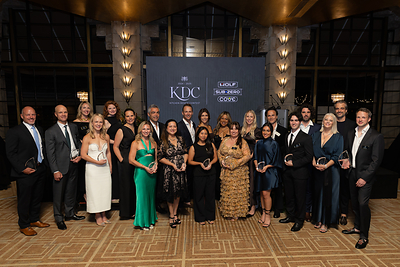
The Global Winners were revealed during the Winners’ Summit and Gala at the Arizona Biltmore in Phoenix on Oct. 28, 2026, a four-day invitation-only event celebrating the Global Finalists and their exceptional work.
“With more than half of this year’s entries coming from first-time participants, we’re seeing new talent bring fresh perspectives to luxury kitchen design. Their work shows that luxury is as much about how thoughtfully a space reflects the people who live in it as it is about beautiful design,” said Jim Bakke, President and CEO of Sub-Zero Group, Inc.
What the Winning Kitchens Reveal About the Future of Design
Observed as a whole, the winning projects offer a global view of how kitchens are evolving, with greater individuality, richer materials, and spaces shaped around the people who use them.
“The Finalists we selected represent an excellent reflection of today’s international kitchen design landscape and the different ways people around the world experience and use the kitchen,” said Judge Davy Swanenberg of Culimaat High End Kitchens. “Global inspiration, travel, and digital media continue to influence designers everywhere, resulting in a more connected design language without losing individuality.”
Across the winning projects, five ideas emerged.
Designed Around Real Life
Luxury is becoming increasingly personal, with design professionals building kitchens for the specific ways homeowners cook, entertain, and move through their homes.
For Transitional First Place winner Gladys Schanstra, that meant accommodating an extensive appliance program across two kitchens for a homeowner with a clear understanding of how the spaces needed to function.
“It was really rewarding for me to work with a client who knew how she wanted to cook, how she wanted to entertain, and then fight for every inch,” said Schanstra.
Judge Sandra Trimmer of Cabinetry Creations, Inc., saw that same emphasis throughout the entries, noting the creativity designers brought to solving problems and selecting appliances around individual client needs, particularly in smaller kitchens.
The Kitchen Becomes Part of the Living Space
The boundaries between the kitchen and surrounding living spaces continue to soften. Across the winning projects, concealed appliances, furniture-inspired cabinetry, indoor-outdoor connections, and layouts centered on entertaining allow the kitchens to become part of a broader living environment.
Contemporary Second Place winner Daniel Boddam’s project placed the kitchen at the heart of the home’s top floor as a space for entertaining business clients, friends, and family, with surrounding living spaces extending outdoors. Looking across the Finalist projects, Boddam also observed increased use of concealed refrigeration in pursuit of “simplicity and creating a calm living environment.”
Modern Design Takes on More Texture and Personality
Across many of the entries, judges observed modern interiors, even as minimalist approaches remained part of the design landscape.
“Modern kitchens are becoming warmer and more layered through a richer combination of colors, textures and materials,” said Swanenberg. “The very minimal, ultra-clean aesthetic is gradually making room for more personality and character.”
Natural and high-quality materials were prominent across categories, including quartzite, marble, wood veneers, and metals. Swanenberg also noted the return of stainless steel, aluminum, brass, copper, glass worktops, and high-gloss lacquer, reinterpreted in more refined contemporary applications. Contemporary First Place winner Adam Kane similarly observed the prominence of natural materials across categories this year.
Trimmer also identified a broader approach to color. Rather than one dominant hue, this year’s entries incorporated greens, blues, raspberry tones, pinks and yellows, alongside custom stonework, thicker countertops, stone backsplashes, and architectural arches.
Cabinetry Takes on the Character of Furniture
As kitchens integrate more fully into living spaces, cabinetry is increasingly taking cues from furniture and architecture rather than conventional kitchen design. Traditional First Place winners Brendan Bader and Jillian Bader integrated refrigeration and cabinetry into an old-world, furniture-inspired composition, while Traditional Third Place winners Rebekah Murphy and Katherine Moore concealed refrigeration within a furniture-like hutch.
Small Space winners Stephen Jolson and Jaclyn Lee responded to the scale and architecture of their narrow Melbourne project by treating cabinetry as individual furniture-like pieces instead of continuous banks of joinery.
“We like to break it down in terms of scale and context and try and create joinery pieces which actually feel more like furniture pieces within a space,” said Lee. “I think it just brings a lovely humanity to a space.”
Design Defies Traditional Categories
Some of this year’s strongest projects resisted easy categorization.
“The boundaries between Contemporary and Transitional kitchens are becoming much less defined, creating designs that feel more timeless and personal rather than belonging to one specific category,” said Swanenberg.
Trimmer observed similar freedom across the entries, noting that even designs entered within the same category did not conform to a common aesthetic.
“There was so much variety and uniqueness to each entry,” said Trimmer. “It looks like the entries are evolving and design is no longer limited to what we see in magazines.”
Together, the projects suggest an evolution toward kitchens less constrained by labels and more shaped by architecture, materials, client needs, and sense of place.
The 16th Kitchen Design Contest Global Winners include:
Traditional Kitchen Design
First Place
Brendan Bader and Jillian Bader, Modern Nest
Santa Fe Hacienda
Scottsdale, Arizona, USA
Second Place
Brandon LeRoy and Jeremy Jackson, Jackson LeRoy
Norman Manor
Salt Lake City, Utah, USA
Third Place
Rebekah Murphy and Katherine Moore, Murphy & Moore Design
Bingley Kitchen
St. Louis, Missouri, USA
Transitional Kitchen Design
First Place
Gladys Schanstra, Drury Design
Two Kitchens, One Home
Chicago, Illinois, USA
Second Place
Carrie Brigham, Carrie Brigham Design
Tudor Mod
Naples, Florida, USA
Third Place
Andrew Sheinman, Pembrooke & Ives
Contemporary Oasis
New York, New York, USA
Contemporary Kitchen Design
First Place
Adam Kane, Adam Kane Architects
Hanby Residence
South Melbourne, VIC, Australia
Second Place
Daniel Boddam, Daniel Boddam
Sanctuary House
Sydney, NSW, Australia
Third Place
Matthew Auerbach, TEYO
Camilla Kitchen
Miami, Florida, USA
Specialty Awards
Best Use Outside of Kitchen
Michelle Mawby and Amanda Cichelli, Lucid Interior Design Inc.
Ravine Residence – Bar
Toronto, Ontario, Canada
Small Space Kitchen
Stephen Jolson and Jaclyn Lee, Jolson Architects
House of Light
Melbourne, VIC, Australia
First-Time Entrant
Tulika Datta and Kim Iris Llanes, Poliform Toronto
Revy Mountain Home
Toronto, Ontario, Canada
Student Winner
Zeeko Papanicolaou
The Chrysalis Kitchen
Melbourne, VIC, Australia
About the Sub-Zero, Wolf, and Cove Kitchen Design Contest
Since its inception in 1993, the Sub-Zero, Wolf, and Cove Kitchen Design Contest (KDC) has celebrated exceptional kitchen design from around the world and elevated the professionals behind it. More than a competition, KDC provides a global platform for outstanding work, innovative ideas, and perspectives that inspire the design community and offer a view into the evolving ways people live.
Sub-Zero Group, Inc.
Sub-Zero Group, Inc. is a third-generation, family-owned and operated company and the industry-leading manufacturer of luxury kitchen appliance brands Sub-Zero, Wolf, and Cove. Headquartered in Madison, Wisconsin, Sub-Zero Group has set a higher standard for design excellence, technological advancement, and performance for more than 80 years.
The company’s iconic brands are trusted in the world’s most luxurious homes. Sub-Zero pioneered the concept of dual refrigeration, ensuring that food stays fresher longer. With the acquisition of Wolf Range Company in 2000, Sub-Zero Group expanded its portfolio to include residential cooking products such as ranges, cooktops, wall ovens, warming drawers, and ventilation. In 2018, the company launched Cove, a new brand focused on dishwashing solutions engineered for spotless cleaning and near-silent operation, completing the kitchen suite.
Proudly American-based, Sub-Zero Group operates more than three and a half million square feet of manufacturing space across Wisconsin, Arizona, and Iowa, representing one of the largest U.S.-based manufacturing footprints in the luxury appliance industry. The company maintains a longstanding commitment to quality, customer service, and innovation. To learn more or experience Sub-Zero, Wolf, and Cove products firsthand, visit www.subzero-wolf.com, follow on Facebook and Instagram, or contact Customer Care at 800-222-7820.

 View original content to download multimedia:https://www.prnewswire.com/news-releases/inside-the-future-of-luxury-kitchen-design-what-global-entries-reveal-302938264.html
SOURCE Sub-Zero, Wolf, and Cove